Internet infrastructure decisions made today shape possibilities for decades. Yet policy cycles, corporate incentives, and technical standards processes often operate on much shorter timescales. This mismatch between long-term consequences and short-term decision horizons creates risks for the open internet—the principle that networks should interconnect openly, enabling interoperability and access across organizational boundaries.
Infrastructure Longevity and Path Dependency
Digital infrastructure exhibits high inertia. Fiber optic cables buried in streets remain functional for decades. Decisions about routing topology continue affecting network efficiency years later. Protocol choices embed themselves in billions of systems, creating profound resistance to change. This longevity means current decisions have extraordinarily long-term consequences.
Path dependency—how earlier decisions constrain future options—means early choices often determine acceptable alternatives later. If infrastructure is built optimizing for one particular use case, adapting to different use cases requires expensive migration. These facts argue for deliberate long-term thinking when making infrastructure decisions.
The Open Internet Principle
The open internet principle—that networks should interconnect openly rather than creating closed silos—has been central to internet development and its success. This principle enabled innovation, competition, and rapid growth by allowing diverse networks to interconnect seamlessly.
Yet the open internet faces pressures. Some actors prefer closed systems enabling tighter control. Others prioritize optimization within controlled systems over openness across systems. Short-term efficiency often conflicts with long-term openness. This creates incentive for decisions favoring near-term optimization at the cost of long-term openness.
Decentralization and Resilience
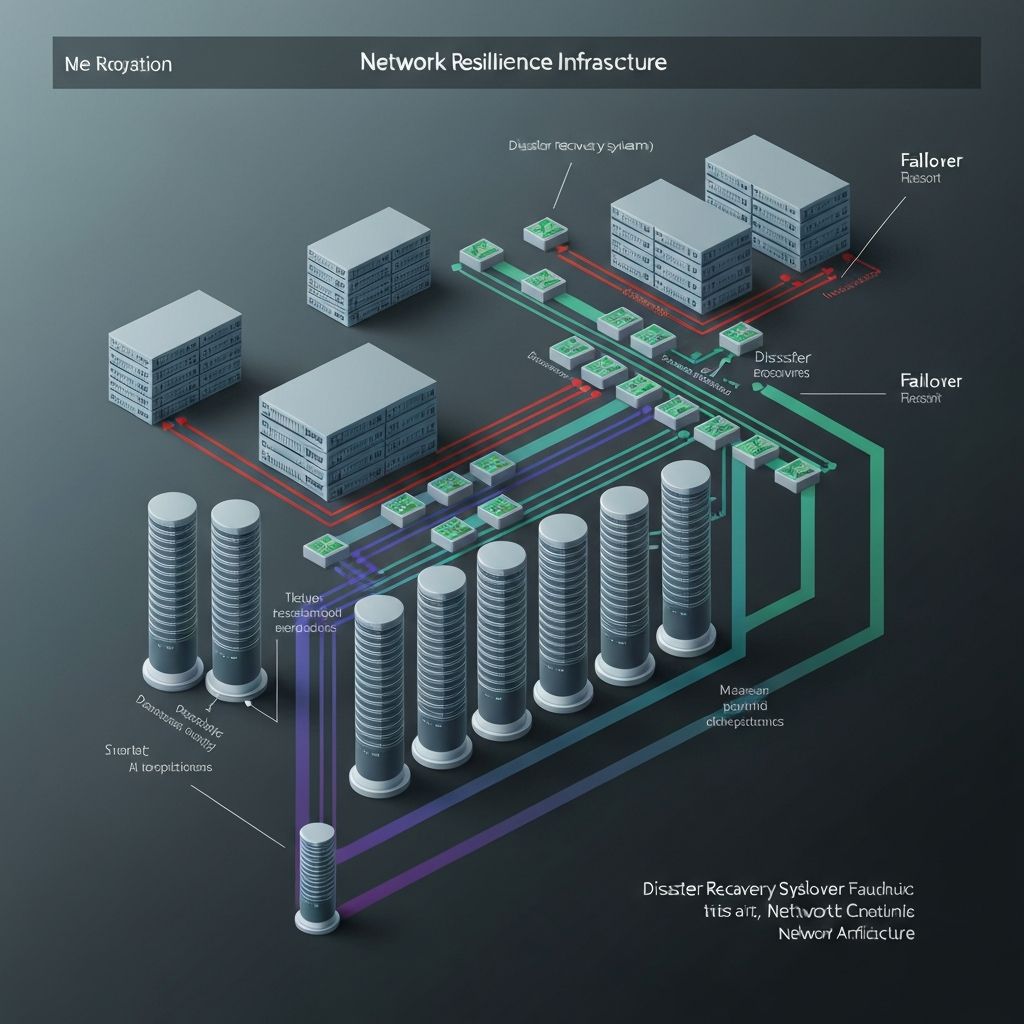
Decentralized infrastructure—distributed across multiple operators rather than concentrated in single provider—enhances resilience. If single operator fails, decentralized alternatives enable continued operation. If single operator makes poor decisions, alternatives enable different approaches. Decentralization costs efficiency in some respects, but gains resilience and adaptability.
Long-term thinking prioritizes resilience even at efficiency cost. Yet short-term optimization often sacrifices resilience for efficiency, creating brittle systems. Decisions made for near-term performance advantages can create long-term structural vulnerabilities.
Policy Horizons and Infrastructure Decisions
Policy processes operate on election cycles and budget years—typically 2-4 years. Infrastructure lives for decades. This mismatch creates systematic bias toward short-term thinking. Political leaders face pressure for near-term visible successes, creating incentives for decisions maximizing near-term benefit regardless of long-term costs.
Corporate decision-making faces similar pressures. Quarterly earnings reports drive focus on near-term returns. Long-term infrastructure investment returns value gradually, appearing as costs in short-term accounting. This incentive structure favors myopic decisions.
The fundamental challenge is that decisions about infrastructure have consequences spanning decades, yet decision-making processes operate on much shorter timescales, creating systematic bias toward short-term thinking.
Technical Standards and Long-Term Governance
Technical standards documents often include text attempting to anticipate future scenarios and preserve long-term flexibility. Yet these documents can only speculate about future needs. Standards that fail to anticipate requirements become obsolete. Standards that overspecify lock systems into particular approaches.
Long-term infrastructure thinking requires explicit governance structures maintaining flexibility. Standards processes must balance specificity enabling interoperability with flexibility enabling evolution. Communities developing standards should include diverse perspectives anticipating varied future needs.
Capacity and Resource Allocation
Building infrastructure requires sustained resource allocation. Short-term budget cycles create perverse incentives—if funding decisions reset annually, institutions rationally allocate resources to quick-return projects rather than long-term infrastructure requiring years for payoff.
Long-term infrastructure requires long-term funding commitments. Mechanisms enabling multi-year budget planning, funding continuity across budget cycles, and resources insulated from short-term political pressures all support long-term infrastructure thinking.
Climate and Sustainability
Long-term infrastructure thinking includes sustainability. Data centers consume enormous energy. Choices about energy efficiency, renewable energy integration, and geographic distribution of infrastructure affect climate impact for decades. Short-term decisions prioritizing lowest immediate cost can create long-term environmental burden.
Long-term thinking requires infrastructure decisions accounting for climate impact, preferring renewable energy, and designing for efficiency. This costs more initially but creates long-term sustainability.
Challenges to Long-Term Thinking
Market structures create barriers to long-term thinking. Companies facing competition cannot make long-term investments if competitors extract short-term value instead. Regulation and policy structures emphasizing short-term returns reinforce these incentives. Power asymmetries between large companies able to absorb long-term investments and smaller actors unable to do so create concentration pressures.
Institutional Structures for Long-Term Governance
Successful long-term infrastructure management requires institutional structures explicitly designed for long-term thinking. Public utilities, nonprofit organizations, and cooperative structures often have longer planning horizons than for-profit companies. Governance structures including long-term representation—positions specifically accountable for future outcomes—can counterweight short-term pressures.
The Stakes
The infrastructure decisions made today—about network architecture, standard protocols, governance models, and resource allocation—will shape internet possibilities for decades. Whether the open internet survives and flourishes depends partly on whether decision-makers maintain long-term perspective, resisting pressures for short-term optimization at the cost of long-term openness, resilience, and equity.
This requires deliberate institutional structures supporting long-term thinking, policy frameworks enabling sustained investment, and communities of practice emphasizing long-term consequences. It requires resistance to short-term pressures from all quarters—political cycles, corporate quarterly earnings, and technological hype cycles. The open internet is not inevitable—it survives only through deliberate, sustained commitment to long-term thinking about infrastructure shaping our digital futures.